
 Whatsapp
 Telegram
 2026-09-02
 The future trend of gold prices is highly influenced by the non-farm payroll data.
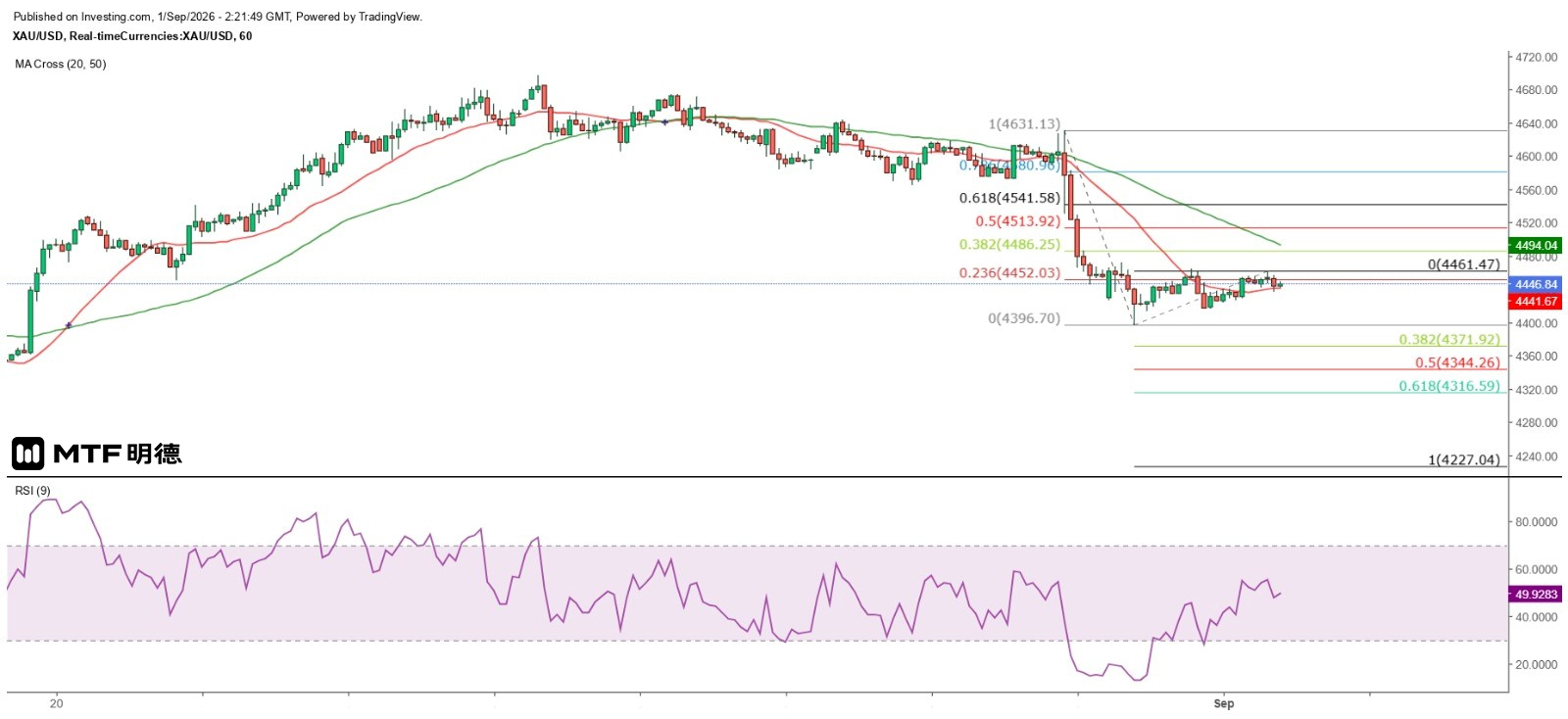
Gold prices are highly sensitive to the upcoming non-farm data. 2/9/2026 11:19 AM
After failing multiple times to break above $4,450 over the past two trading sessions, gold has broken downward. As seen on the hourly chart, prices continued to hit a recent low in this morning's Asian session at $4,287.54, with the weak support level of the Gann 225-degree angle at $4,310 also giving way. However, the 9RSI has dropped to 15, suggesting a strong rebound is likely. Conservative investors should wait patiently for a bullish engulfing pattern on the hourly chart before entering the market.
Friends are currently awaiting tonight’s ADP release of August non-farm employment data as a potential turning point. The market currently expects an increase of 48,000 jobs. Unless new job additions exceed 100,000, gold is expected to rally significantly. Nevertheless, the market may still consolidate at lower levels or even drop near $4,210, clearing out long positions before positioning ahead of Friday’s official non-farm employment report.
On the daily chart, gold has already fallen below the 20SMA (4,445), with the 50SMA (4,222) now serving as the final defense line. I believe gold still has strong potential to hold this level. It’s important to note that when prices approach key support levels just before major data releases, they often reverse regardless of how poor the data turns out. The $4,210 level lies along the Gann square’s 180-degree angle, making its support stronger than that at $4,310. If we consider further downside risks—such as a breakdown below $4,200 or even $4,000—the first trigger would be the Federal Reserve’s September rate decision. Only if both non-farm employment and inflation move in the same direction will the probability increase. At present, these factors remain in tension.
The above information is for reference only and does not constitute investment advice.


