
 Whatsapp
 Telegram
 2026-04-23
 Was the interest rate cut during the "Wash Era" necessarily a good thing?
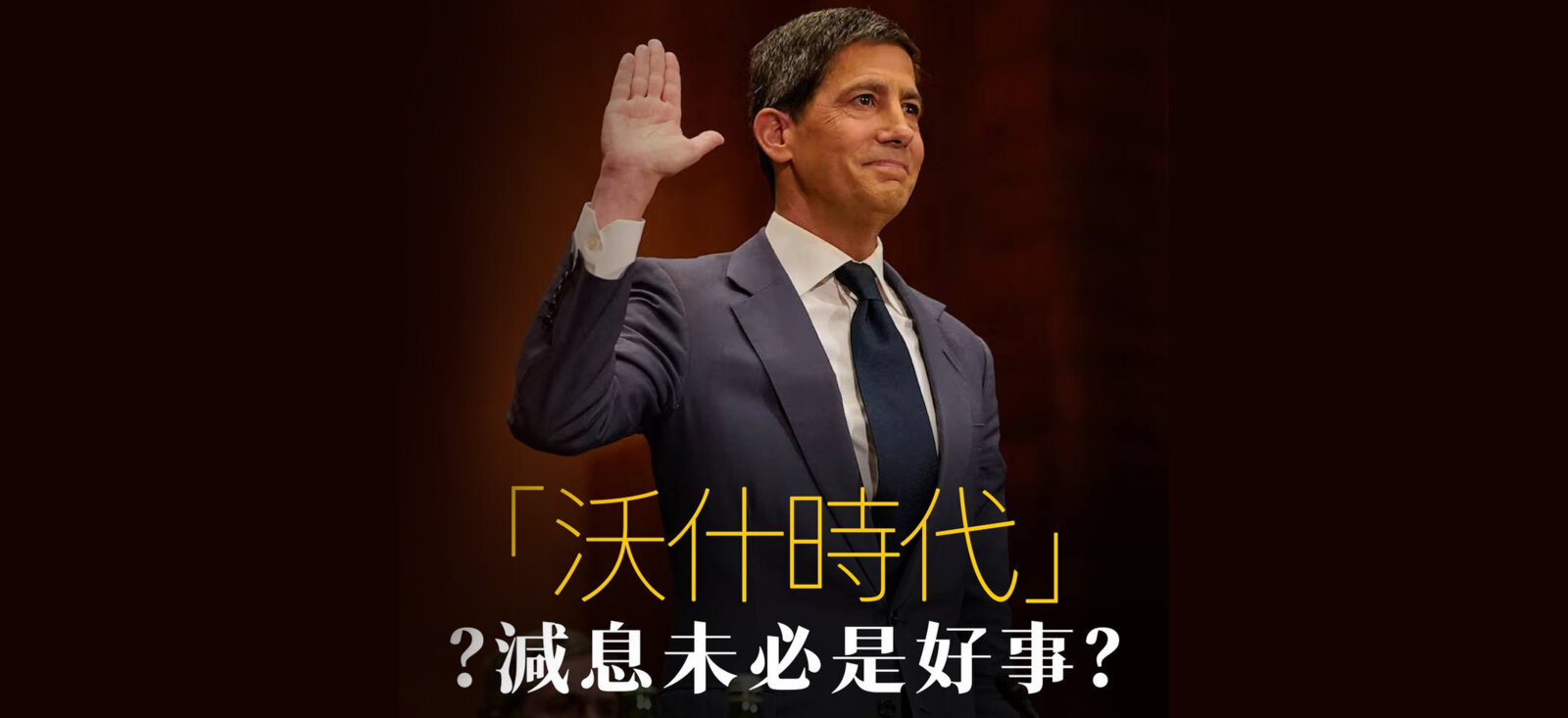
Recently, everyone's focus has been on whether the Federal Reserve will keep the interest rate at 3.75% at its meeting next Wednesday. When hearing "no rate cut", many people's first reaction is negative: higher borrowing costs, possible pressure on the stock market, and slower economic growth. But as an investor, what you should pay more attention to is the real interest rate.
The real interest rate = the nominal interest rate - the inflation rate.
For instance, if the bank interest rate is 3.75%, but prices rise by 5% each year, your actual return is actually: -1.25%
In other words, although the account balance may seem to have interest income, your purchasing power is actually declining. This also explains why many people in recent years have felt that despite having a job and income, life is still getting more and more difficult. Because what is truly eroded is not the deposit figure, but the value of the money in your hand.
Why does maintaining high interest rates have a protective effect instead?
Kevin Warsh, the popular candidate for the chair, demonstrated an extremely tough stance at the hearing. If the Federal Reserve continues to take a hawkish stance in the future, the core idea behind it is actually very clear: price stability is more important than short-term market comfort.
① Guard your purchasing power
If interest rates are cut too early, market funds may become overly loose again, causing demand to rise and pushing up:
rents, food prices, service costs, and asset prices
On the surface, the amount in your account may not change, but in reality, you can buy less with it.
The purpose of high interest rates is to reduce overheated demand and bring inflation back under control.
② Avoiding the Uncontrolled Expansion of Asset Bubbles
Looking back at the era of ultra-low interest rates, when the cost of capital was extremely low, a large amount of funds flowed into the stock market, real estate market, and high-risk assets.
The result was often that prices rose too fast, detaching from the fundamentals.
Although maintaining a relatively high interest rate may cause discomfort in the market in the short term, it can curb excessive speculation and prevent paying a higher price when the bubble bursts in the future.
③ Establishing Confidence in the Monetary System
If the central bank rushes to cut interest rates every time there is market volatility, investors will start to wonder: Is the currency being continuously devalued? The role of the central bank is not just to rescue the market, but more importantly, to maintain the credibility of the currency. Only when the market believes that the currency is still under control will the entire financial system be stable.
The "Wash Era" has arrived. How will gold fare?
When central banks need to maintain high interest rates for a long time to suppress inflation, it reflects one thing: the purchasing power of money is facing challenges.
In an era of unstable geopolitics and sticky inflation, the value of gold is not just that of a commodity.
It is an asset that does not rely on any government's promise.
Gold does not pay interest, but its greatest role often emerges when the value of currency is in doubt.


